
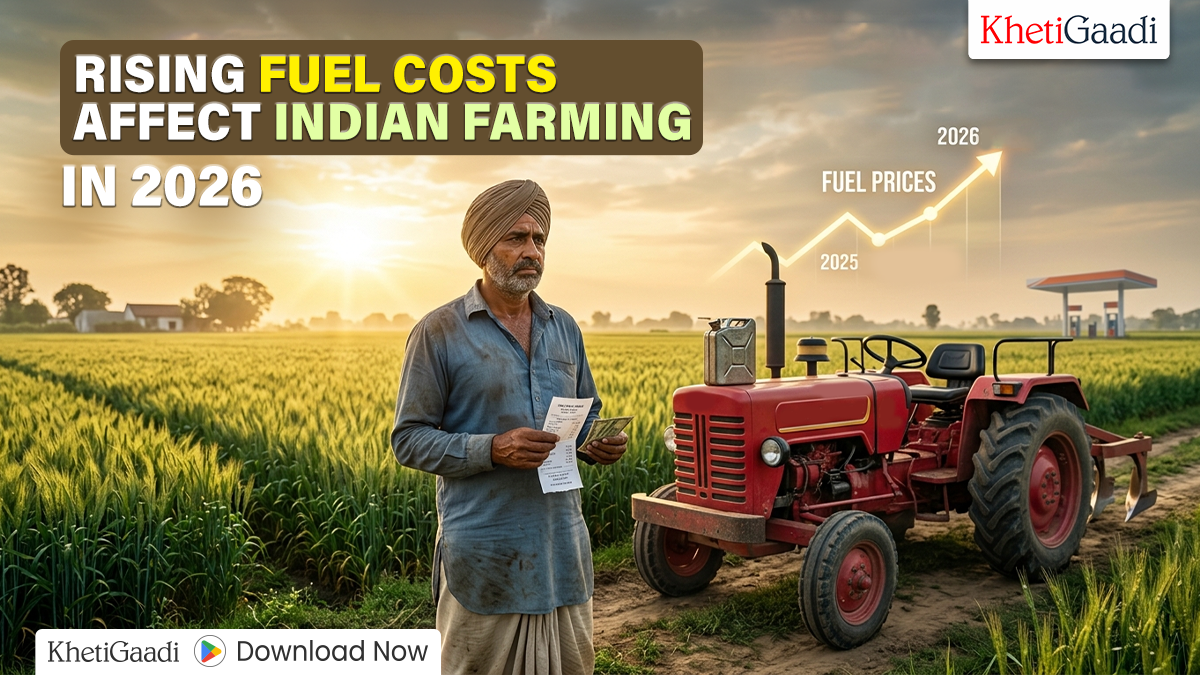
Rising Fuel Prices Impact on Indian Agriculture in 2026
Indian agriculture is facing major challenges in 2026 because fuel prices are increasing rapidly.
Indian farmers depend heavily on diesel and fuel-powered machines for farming activities such as ploughing, planting seeds, irrigation, harvesting crops, and transporting produce to markets.
Rising fuel prices are making it difficult for farmers to earn a stable income from agriculture. Medium-scale and small farmers are among the most affected because they often struggle to afford fuel for their agricultural machinery.
Modern Farming Relies on Agricultural Machinery
Modern farming today depends on:
- Tractors
- Harvesters
- Rotavators
- Irrigation Pumps
- Other Agricultural Machinery
These machines improve productivity and reduce manual labor. However, they also increase fuel consumption during long working hours. As diesel prices continue to rise, farmers are finding it more difficult to manage farming expenses every season.
Fuel Prices Increase Farming Expenses
Fuel is one of the most important requirements in agriculture. Tractors and farming machines operate for several hours daily, especially during land preparation and harvesting seasons.
Higher fuel prices increase the cost of farming operations and create financial pressure on farmers.
Farmers use fuel for:
- Tractor Operations
- Irrigation Pumps
- Harvesting Machines
- Transportation of Crops
- Rotavator and Cultivation Work
- Spraying Equipment
As fuel expenses increase, farmers must spend more money at every stage of farming. This creates serious difficulties for farmers managing limited agricultural budgets.
Small Farmers Face Bigger Challenges
Small and marginal farmers are among the most affected by rising fuel prices.
Many farmers already face challenges such as:
- Expensive Fertilizers
- Changing Weather Conditions
- Labor Shortages
- Unstable Crop Prices
Rising fuel costs make farming even more expensive and reduce farmers’ income.
Farmers with smaller land areas often depend on rented tractors and agricultural machinery. Rental charges increase when fuel prices rise, making it difficult for small farmers to afford modern farming equipment during important agricultural seasons.
Impact on Crop Transportation
Rising fuel prices are also increasing transportation costs. Farmers need vehicles to transport crops from farms to local markets. Higher diesel prices increase transportation expenses, reducing the final profit farmers receive after selling their crops.
Transportation costs also affect:
- Fruits
- Vegetables
- Grains
- Dairy Products
These products require regular transportation to markets. In some cases, higher fuel prices can also increase food prices for consumers.
Farmers Moving Toward Fuel-Efficient Machinery
To reduce expenses, many farmers are now choosing fuel-efficient tractors. Advanced tractors with better mileage help farmers save fuel while maintaining strong field performance.
Manufacturers are also introducing smart farming technologies and efficient engines that reduce fuel consumption during daily agricultural work.
Farmers are looking for:
- Fuel-Efficient Tractors
- Smart Irrigation Systems
- Modern Farming Equipment
- Low-Maintenance Agricultural Machinery
- Electric and Alternative Farming Solutions
These technologies help improve productivity while reducing long-term operational costs.
Government Support for Farmers
The government is also taking steps to support Indian farmers through agricultural schemes, subsidies, and farm mechanization programs.
Several initiatives encourage farmers to adopt modern machinery and advanced irrigation systems that improve farming efficiency and reduce unnecessary expenses.
Support programs include:
- Fuel-Efficient Farming Equipment
- Solar-Powered Irrigation Systems
- Agricultural Loans
These initiatives are helping farmers manage rising operational costs.
Experts believe that increasing awareness about modern farming methods and efficient machinery can help farmers reduce fuel dependency and improve profitability in the coming years.
Smart Farming Becoming More Important
Rising fuel prices are encouraging Indian agriculture to move toward smart farming methods.
Modern agricultural technologies include:
- Digital Agriculture
- Precision Farming
- Technology-Driven Equipment
These solutions help farmers optimize resources and reduce wastage.
Smart farming solutions help farmers:
- Reduce Fuel Consumption
- Save Time During Field Operations
- Improve Crop Productivity
- Lower Labor Dependency
- Increase Farm Efficiency
As technology continues to advance, smart farming may become one of the best long-term solutions for reducing agricultural costs in India.
Conclusion
Rising energy costs in 2026 are creating major challenges for Indian farmers by increasing operational and transportation expenses.
From tractor operations to crop delivery, fuel plays an important role in agriculture. Higher fuel prices are affecting farm profitability, especially for small and medium-scale farmers.
The growing use of fuel-efficient tractors, smart farming technology, and modern agricultural machinery is helping farmers find better solutions for cost management and productivity improvement.
With continued government support and modern farming practices, Indian agriculture can move toward a more efficient, sustainable, and profitable future.