
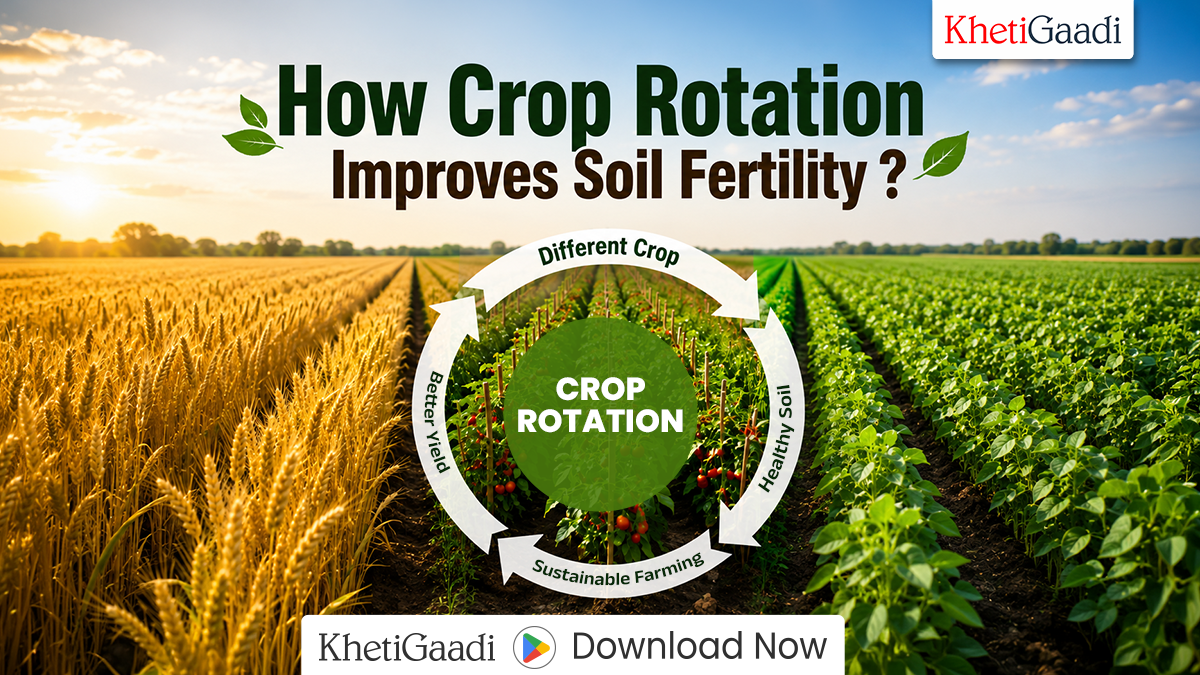
When farmers grow the same crop over and over, they can remove important nutrients from the soil. That can lead to pests, more diseases and weaker soil. Crop rotation is a way to stop those problems. By switching which crops are planted on the land each season, farmers can keep the soil healthy.
With crop rotation, farmers plant cereals, legumes, vegetables and other crops in order. This helps balance nutrients, improve soil structure, add organic matter and bring in helpful soil organisms. This practice keeps the land ready for the harvest.
What Is Crop Rotation?
Crop rotation means growing crops on the same field in a planned sequence. For example, a farmer may grow wheat followed by chickpea or soybean. The way a farmer chooses that sequence depends on soil type, climate, water availability, crop requirements and market conditions.
How Does Crop Rotation Improve Soil Fertility?
Different crops need nutrients. Growing the crop over and over can slowly take away some nutrients. Changing crops helps spread out the nutrient use and can help keep the soil healthy and full of nutrients.
Legumes like chickpeas, peas, beans, lentils and soybeans are very helpful because they work with bacteria that add nitrogen to the soil. Their leftover parts can also add to the soil.
Different types of roots can make the soil better by making spaces for air and water to move through. This can help roots grow better and make the soil environment better.
Can This Practice Boost Crop Yields?
A well-planned rotation can support crop productivity by improving nutrient availability, soil structure, and pest management. However, yield results depend on crop selection, weather, irrigation, soil conditions, fertilizer management, and other farming practices.
How Does This Approach Help Control Pests and Diseases?
Growing the crop over and over can give pests and diseases a steady place to live. Changing crops can break these cycles and make it harder for some pests and diseases to stay around.
Farmers need to use this method along with good ways to handle pests and diseases.
Best Practices
- Choose plants that need different nutrients.
- Add legumes.
- Pick crops that have different root lengths.
- Do not plant plants from the same group over and over again.
- Take care of the leftover plant parts correctly.
- Think about the soil, the weather, the water and the selling place.
Conclusion
Crop rotation can improve soil health. This practice can balance nutrients and strengthen soil structure. It can support soil organisms, help manage pests and diseases, and also support crop yields.
Farmers should plan crop rotation based on soil, climate, water availability, crop needs and farm goals.
Frequently Asked Questions
1: What Is the Biggest Advantage of Crop Rotation?
The rotation system helps maintain soil health, balance nutrients, and reduce some pest and disease problems.
2: Which Crops Improve Soil Fertility?
Legumes such as chickpeas, peas, beans, lentils, and soybeans can improve soil fertility by fixing nitrogen.
3: Does Crop Rotation Increase Crop Yield?
Yes, this practice can support better crop yields by improving nutrient balance, soil structure, and pest management.
4: How Often Should Farmers Rotate Crops?
There is no fixed schedule. Farmers should consider soil type, climate, crop families, water availability, nutrient needs, and market demand.