
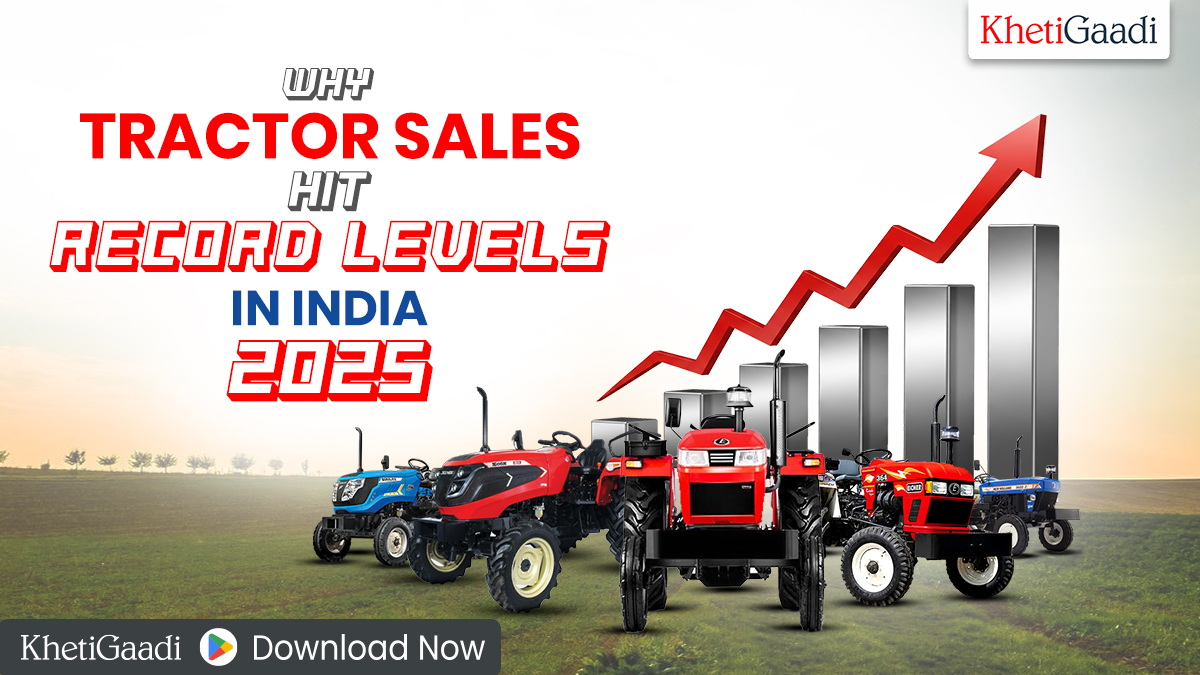
2025 was a year that changed it all for Indian agriculture. Sales of tractors went through the roof in the country and recorded good growth as compared to what it had been over last few years. Farmers in nearly all large farming areas wanted to buy tractors and dealers had one of the strongest sales periods on record.
Tractors are no longer considered as merely machines for ploughing the land. By 2025, they were the epitomes of progress, efficiency and financial stability for farmers. They did so for a series of practical and economic reasons that converged.
Sharp Rise in Tractor Sales
Sales of tractors in 2025 went up riding on demand from small and big farmers. Increases were widespread across states, particularly in major agricultural areas.
Key drivers behind the increase in sales were:
- Newcomers to the world of tractors buying their first machine
- Farmers replacing old tractors with new ones
- Increased awareness about mechanised farming
- Improved availability of tractor models and services
This dual demand helped drive historic sales in the tractor industry.
Good Monsoon and Better Crop Output
Farmer confidence got a shot in the arm from a good monsoon. Rainfall was prompt and widespread in several areas, resulting in higher crop yields.
Because of better production:
- Farmers post-harvest enjoyed more income
- At the village level cash flow improved.
- It was safer to invest in farm machinery
If farmers are seeing good things from their crops, they’re also more likely to make long-term asset purchases such as tractors.
Increase in Farm Income
Farming income in 2025 rose because of higher crop prices and demand at markets. A lot were helped by government procurement and support programmes too.
Higher income allowed farmers to:
- Shop for Your Tractor Without Any Financial Pressure
- Tractor prices and features are worth comparing very closely
- Choose fuel-efficient and durable models
This indicates that farmers are increasingly making more careful and considered purchasing decisions on tractors.
Government Support and Policy Help
Tractor sales receive boosts from government policies in more than one way. Programmes encouraging the use of farm machines lightened the cost load on tillers.
Key policy benefits included:
- Subsidies on agricultural equipment
- Lower indirect taxes on tractors
- Support for rural infrastructure development
“Narrowing the on-road price, even by a marginal rate, made tractors affordable among small and marginal farmers.
Easy Loan and Finance Options
Financing was one of the most important factors influencing tractor sales in 2025. There were farmer-friendly loan programmes by banks and financial institutions.
Farmers benefited from:
- Low down payment requirements
- Flexible repayment periods
- Faster loan approvals
- Dealer-assisted financing support
This enabled small savers to own their tractors.
Labour Shortage and Rising Costs
Farflung localities had to face an acute shortage of manpower. Workers migrated to cities, and farm wages rose.
Farmers overcame this problem by adopting tractors since:
- Truck dependancy on manpower is eliminated by Tractors
- Farms are able to operate and complete on schedule
- Short crop cycles lead to high productivity.
That is when mechanisation was not an indulgence but a necessity.
Tractors as an Extra Income Source
In many villages, tractors are used for more than personal farming. Farmers often rent out their machines to neighboring farmers.
This provides benefits such as:
- Extra income throughout the year
- Faster recovery of tractor cost
- Better utilisation of machinery
This trend increased in 2025 and led to further farmers to purchase tractors.
What This Growth Means for Farmers
For farmers, record tractor sales equate to wider access to modern tools and better working conditions.
Major benefits include:
- Reduced physical effort
- Better time management
- Increased farming efficiency
- Improved crop planning
Tractors assist farmers in controlling larger tracts of land and help prevent loss of crops due to lateness.
What This Growth Means for Dealers
For dealers, 2025 was good business. Higher tractor sales also led to higher demand for spare parts and servicing.
Dealers benefited through:
- Higher overall revenue
- Stronger customer relationships
- Growth in after-sales services
- Increased use of digital tools
Here service-oriented, trust-building dealers did better in competitive markets.
Challenges That Still Exist
For all its record sales, there are a few downside:
- Increased cost of manufacturing and raw materials
- Possible increase in tractor prices
- Unequal demand on account of the weather factor
Farmers also required proper advice to select the appropriate tractor according to land size and use.
Conclusion
Record tractor sales in India in 2025 clearly indicate a transition to mechanised and modern farming. Favourable monsoon conditions, increased farm income, government support, easy finance and labour shortage were some of the factors that adversely impacted production and increased lending.
To farmers, tractors are a source of productivity and stability of income. They’re long-term business for dealers. If this trend persists, tractors will continue to be the engine of India’s farm growth for several years.