
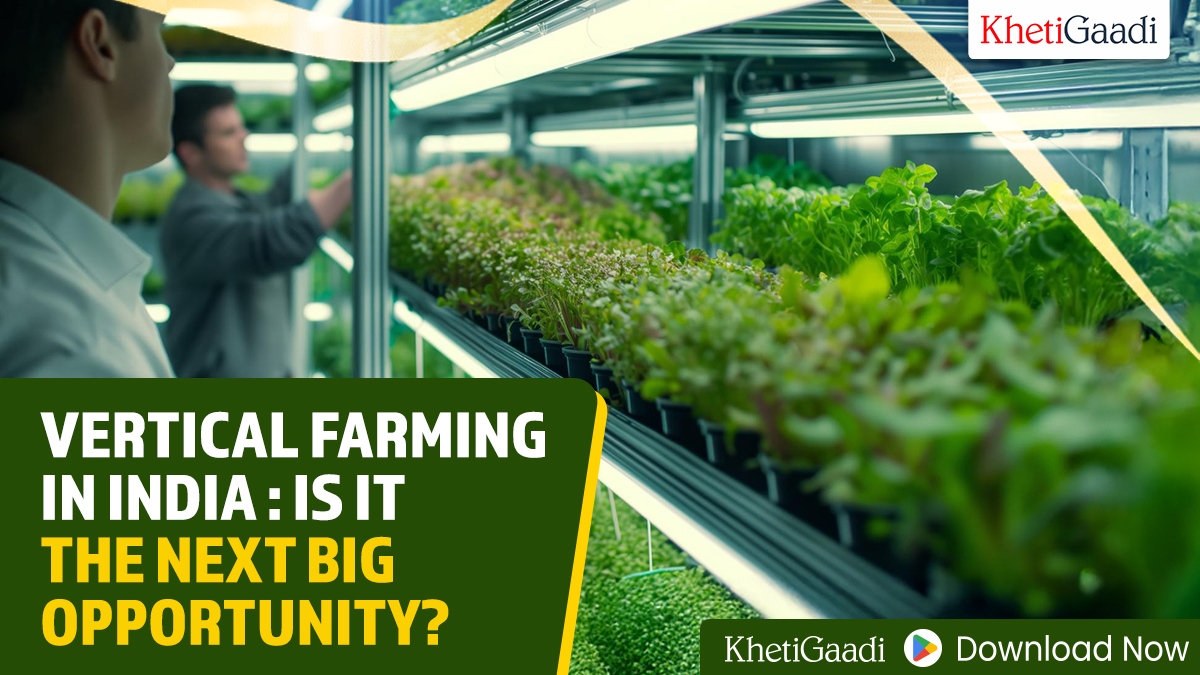
In India, agriculture is not merely a job; it is a way of life. Truly, agriculture is facing so many challenges. The land is shrinking, while water and cities are growing in size faster than ever. Young people are leaving the village of their forebears, and it is becoming harder to keep traditional farming alive. Amidst all these challenges, a new concept is taking root (pun intended), that of vertical farming.
Vertical farming is growing crops in layers. It can be soil-based or non–soil–based, but it does so on land rather than across hectares of space. It relies on buildings, indoor spaces, rooftops, and controlled environments to grow vegetables and herbs. It may sound like something out of a science fiction novel, but it is already taking place in various parts of the globe — and India is beginning to catch up.
The big question: can vertical farming be the next big thing for Indian agriculture?
Why India Needs New Farming Methods
India’s population is growing, but farmland is not. Cities are gobbling up farmland. Weather isn’t weather like it used to be; climate change is making nothing predictable. Farmers can’t rely on rain the way they used to. Traditional farming requires large amounts of land and water, both of which are in short supply.
Vertical farming is a way to produce more food in less space. Instead of scaling out, farms grow. This is particularly impactful in cities and areas where there is little space but a high need for fresh food.
Urban families desire healthy, pesticide-free vegetables. Restaurants want reliable supplies. Supermarkets want consistent quality. These requirements can be met through vertical farms as the conditions in which crops have to grow are controlled.
How Vertical Farming Works
Vertical farms grow vegetables using hydroponics or aeroponics. That means there is soilless crop growth. They take nutrients in through water soluble mediums. Sunlight is replaced by LED lights, and temperature is monitored and controlled.
Because everything is managed indoors:
- Crops grow faster
- Seasons do not matter
- Water use is very low
- Pesticides are rarely needed
This system reduces risk. No floods, droughts, or storms can harm indoor crops. Farmers get predictable harvests.
Opportunities for Young Entrepreneurs
Traditional farmers aren’t the only ones here to feed us. It’s a door opener for startups and urban entrepreneurs. Many young Indians are constructing small indoor farms in warehouses, basements or on rooftops.
These farms supply:
- Premium vegetables
- Exotic herbs
- Leafy greens
- Microgreens
In urban markets, these commodities are sold at relatively higher prices. Restaurants and health-conscious consumers are willing to pay a bit extra for fresh, locally grown items.
That makes for a new business model that combines farming with technology and entrepreneurship.
Water and Environment Benefits
India is already water-stressed. Agriculture is the greatest source of water. Vertical farming consumes approximately 90% of the water less than traditional farming. Water is reused inside the system instead of being thrown away.
There is another environmental advantage. With food grown nearer to cities, transportation is limited. This has the added benefit of reducing fuel use and carbon emissions. Fresh fruits and vegetables can travel shorter distances and reach consumers more quickly.
Vertical farming also limits the runoff of chemicals in soil and rivers. And it is a cleaner way to make food.
Challenges That Cannot Be Ignored
Vertical farming isn’t perfect, though it has a promise. The biggest challenge is the cost. Vertical farms are costly to establish; they need lights, climate systems, and equipment. Electricity is expensive too.
Technology knowledge is another barrier. Farmers must learn new skills. Running a vertical farm is more akin to running a lab than a field. Without training, errors can be costly.
There is also a challenge in the market. Today, vertical farming concentrates on high-value plants. It can’t yet replace big-acreage grain farming. It will be an adjunct, not a substitute for agro-industry”.
Government and Private Support
Support systems matter, for vertical farming to take off in India. Subsidies and training programs—policy levers that encourage start-ups. Private investors can help expand operations.
Agriculture universities and research institutes also must contribute. They can make cost-effective technologies which are ideal for Indian conditions. The cheaper systems cost, the more farmers will use them.
Public awareness is important. People need to appreciate the worth of locally grown and clean fruit and vegetables. Demand drives growth.
A Hybrid Future for Indian Agriculture
The future of Indian agriculture is not an either/or between the old and new. It is about combining both. Grains and larger crops will still be produced in traditional farming. Urban food supply and high value vegetables will be managed by vertical farming.
This hybrid system creates balance. Rural farmers keep working and cities start growing their own food. It also relieves pressure on land and water and brings more global food security.
It most importantly brings young people into agriculture. When farming is modern and profitable, it becomes interesting again.
Conclusion
Vertical farming is no magic bullet, but it’s a real opportunity. It conserves water, requires less land and its clean food grown near cities. For a country like India, where resources are already stretched, this was significant.
And its success will rely on affordability, training and smart investment. Vertical can scale quickly if tech is available to make it.
- It’s a boon for urban agriculture.
- It reduces environmental pressure
- It strengthens food security
The future of India’s agriculture field might not just spread out in wide open spaces. One could also build the product vertically — a layer at a