Farming is changing fast. Farmers are now thinking not only about crops and tractors, but also about fuel, electricity and rising costs. Diesel has been the most common power source for tractors, pumps and farm machines for decades. But now solar and other renewable sources of energy are catching on in Indian agriculture.
Solar power is rapidly becoming a game changer in agriculture as farmers look for ways to reduce their dependence on diesel and expensive electricity. By using solar panels to run irrigation pumps, cold storage units, and farm equipment, farmers can lower operating costs while ensuring a reliable energy supply.
Solar energy also helps protect the environment by reducing air pollution and carbon emissions, making farming more sustainable in the long run. With increasing government support and falling technology costs, more farmers are adopting solar solutions to improve productivity and secure a cleaner, more independent future for agriculture.
So, the question is: Is renewable energy’s role in farming a mere dalliance or the wave of farmers’ future? Let’s find out.
Why Farmers Are Dumping Diesel
Every year, diesel prices go up. This hits farmers directly, as tractors, irrigation pumps and generators all run on fuel. Farming is expensive when diesel gets expensive.
Apart from cost, diesel causes:
- Air pollution
- Noise pollution
- Health problems
- More maintenance for engines
And more and more farmers today are clamoring for a cleaner, cheaper alternative. This is where solar power and renewables fit into farming.
What is Renewable Energy for Farming?
Renewable energy is a term for the types of energy that do not have an exhaustible limit, which comes from natural sources:
- Sun (solar)
- Wind
- Water
- Biomass
The form of solar engergy most useful in agriculture is. Solar panels turn the energy from sunlight into electricity that can be used to:
- Run irrigation pumps
- Power cold storage
- Charge electric tractors and tools
- Light farm buildings
Solar Pumps: A Big Change in Irrigation
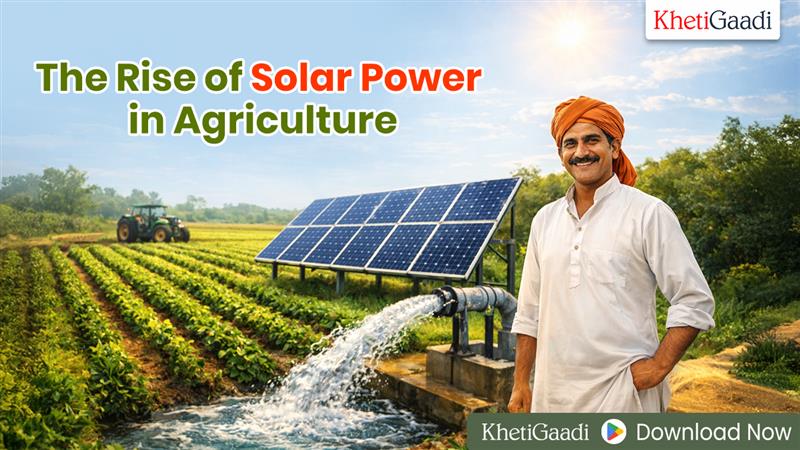
One of the most widely used solar applications in farming is the solar water pump. The pumps run on sunlight rather than diesel or electricity from the grid.
Benefits of solar pumps:
- No fuel cost
- Even in areas without electricity it works
- Low maintenance
- Long life
- Environment-friendly
Under such a situation, farmers can irrigate their fields without being affected by the power cuts or availability of fuel. This can be very handy in rural and outback communities.
Next – Electric and Solar Powered Tractors
Electric and solar-powered tractors, too, are now under development from companies. These tractors:
- Do not use diesel
- Make less noise
- Produce no smoke
- Cost less to run
Though new to India, they are gradually picking up Marwari users. Farmers could one day power their tractors using the solar power generated on their own land.
Such thing can save the cost of fuel and will make farming more sustainable.
How Farmers Can Save Green by Going Big on Renewable Energy
The greatest benefits of renewable energy however, are the long-term savings.
Yes, solar panels and hardware may be more expensive to install up front. But after installation:
- There is no monthly fuel cost
- Very little maintenance
- Free energy from sunlight
Farmers save thousands of rupees on diesel and electricity bills over time.
There are many government schemes that also offer subsidies and assistance with solar pumps, and with solar systems, it could be made affordable for farmers.
Environmentally and Health Wise Better
Renewable energy is clean. It cannot give off smoke or toxic gases. This helps:
- Reduce air pollution
- Protect soil and water
- Improve farmer health
Farms powered by solar and electricity are safer for their workers, and better for the natural environment.
More Independence for Farmers
Farmers rely on both fuel prices and supply when it comes to diesel. With electricity, they rely on power outages. But with solar, farmers gain more independence.
They can:
- Run pumps anytime
- Store energy in batteries
- Power machines on their own
That provides farmers with more control.
Problems of Solar Energy
While renewable energy has many benefits, there are a few downsides:
- High initial cost
- Need for technical knowledge
- Battery storage cost
- Weather dependency
But these issues are getting smaller all the time, as prices decrease and technology improves with each passing year.
The Sunflower Economy and The Future of Indian Agriculture
The future looks bright. The Indian government, along with many corporations, are investing in:
- Solar pump programs
- Electric tractors
- Solar-powered farm tools
In the years ahead, many more farmers will migrate from diesel to solar: It’s cheaper and cleaner and smarter.
Conclusion
Farming is about to enter the digital age, from diesel to solar. Alternative is no longer an option it should be the way. It lets farmers save money, helps the planet and makes them more independent.
With the economy of scale, and cost coming down, solar plus electric would be significant player in Indian agriculture.
To the future of farming and it isn’t just green; it’s bright.