High prices or low, farming has always been difficult labor. Over the years, farmers employed implements, beasts of burthen (bullock) and human sweat and toil in putting the field work done. While these traditional farming methods have helped us produce food for generations, they also come up with a whole host of hidden costs. Those costs are not always immediately evident, but they slow down farming and make it more costly and cumbersome.
Now, tractors and other farming machines are transforming how farmers operate. They are a way of minimizing several of the hidden costs associated with traditional farming, making work easier and quicker. This kind of shift in farming is called, Farm Mechanisation and it has several advantages for farmers.
In this blog post, we will show you the hidden costs of traditional farming and how tractors cut those costs in a language that’s easy for anyone to read.
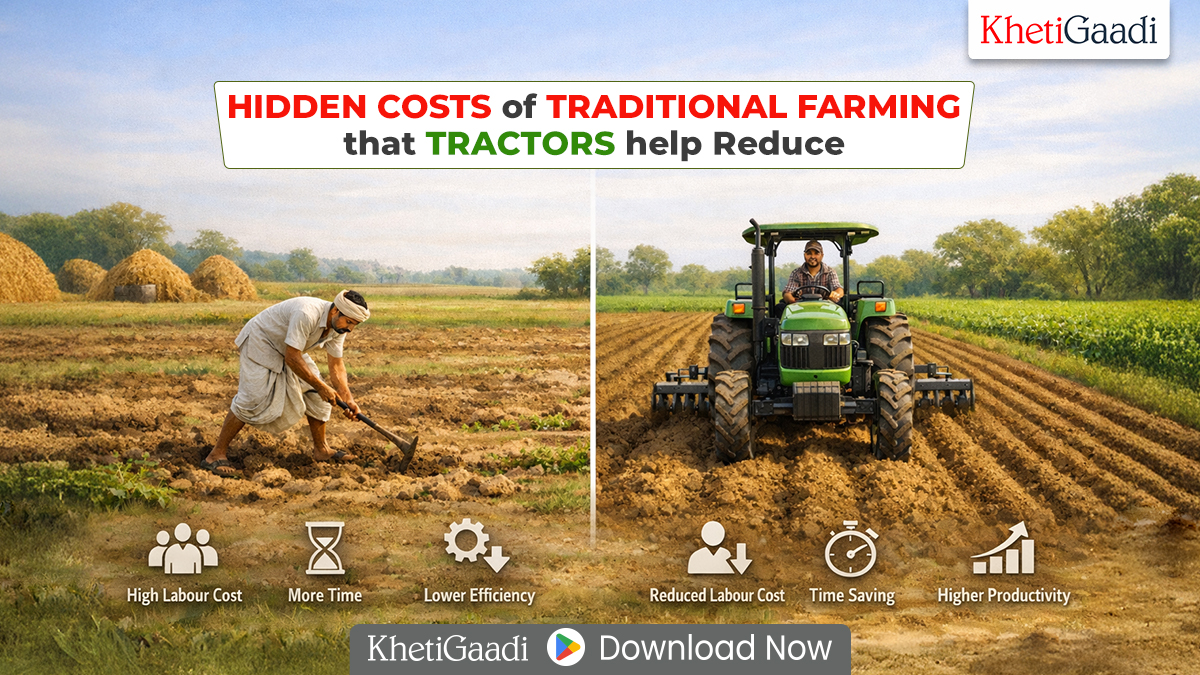
High Labour Costs
Traditional Farming heavily depends on manual labour or animals (bullocks, etc.). Plowing, seeding, carrying produce and harvesting all need a lot of people.
Because of this:
- Farmers must pay daily wages.
- They generally employ labour during the high season.
- It gets costly when labor is scarce.
Most farmers have a hard time finding workers, and when it’s difficult to find labor, wages rise. All of this adds to the cost of farming. When you use a tractor, a lot of the work which was done by many people can be carried out with only one machine. This saves a lot of labour costs and money.
Time Loss and Delays
Farming in the old way is laborious. Breaking in fields with bullocks could have taken days. Sowing, weeding and harvesting also represent many long hours when carried out by hand.
Time matters because:
- Late planting also can result in a lower yield for the crop.
- Harvesting late can damage crops.
- Postponements can shift the odds of weather in spytag 332 matches.
Tractors help finish tasks quickly. In the hands of farmers who have the right equipment, they can plow, sow and harvest more quickly. Faster work here can boost crop output and prevent loss of harvests by the weather or pest attacks.
It saves time and money by helping to speed up fieldwork, part-of the work that is done in spring along with other agricultural operations. Rough mixing of the soil hoeing or weeding arm ents (tools) of a modern tractor comprises first-cost fundamental value oi A RUBICON separator was pre- than one-compartment designs.
Lower Productivity
Labour is a major input in the traditional type of farming and uses men and animal power. This is a constraint on how much work can be accomplished in a day. When a farmer needs to extend the area or scale of production, doing so with manual labor is difficult.
Low productivity affects profits because:
- More of the land is not prepared on time.
- Crop cycles become longer.
- Farmers struggle to boost their income.
The tractor and implement facilitated the farmer to finish his work in a timely manner. Machines are stronger and can work longer hours without fatigue, making production more efficient. Greater productivity means more product and better income for the farmer.
Hidden Animal and Feed Costs
Traditional farms often employ animals such as bullocks or horses to pull and plough heavy tools. And, while these creatures aid the situation, they produce ongoing costs.
Animal costs include:
- Feeding and fodder cost
- Veterinary care
- Shelter and maintenance
In summer or winter, animals may require additional care. These costs add up over time. Once tractors are bought, they aren’t hungry or thirsty (save for gas and maintenance). In the long run, buying a tractor might cost less than keeping animals for demanding field work.
Equipment and Tool Inefficiency
And while hand tools like the plough, sickle and hand weeder are simple and inexpensive. They are slow however, and don’t work large fields at a fast pace. More staff is also needed to use these tools.
Τractors enables the attaching of Tractors and Machinery such as:
- Ploughs
- Seeders
- Rotavators
- Harvesters
- Sprayers
They are a great way to accomplish many tasks in one fell swoop. Begin applying less, burning less fuel across the field and spending less time better preparing for planting or other applications. It is more efficient and saves money on additional manual labour.
Crop shrinkage as the result of slow activities
In traditional agriculture, work speed is determined by labour supply and weather. Crops can rot if rain comes before crops are harvested. Plant late when ploughing starts late. This discrepancy in timing results in crop loss.
But tractors allow farmers to control over timing. Agricultural operations can be recorded in timely before major weather condition adjustments. This will minimize crop loss threats and enhance the general farm earnings.
Fuel and maintenance cost (over the duration of time)
Tractor work requires fuel and maintenance, but in the long term, it’s more efficient than doing things the old-fashioned way. Newer tractor are built to be more fuel efficient and more powerful. This means:
- How to save more fuel per hour of work.
- Costs are generally cheaper than hiring daily wage labour
- Better management of resource usage
Equipment on tractors can help increase fuel efficiency and result in long-term savings. By minimizing idle time and accomplishing more work with less fuel, tractors make the practice of farming cost effective.
Better Soil Management
The classical tilling practices frequently cause cultivation damages in soil. Parado, two deep tillage or uneven ploughing may cause compacted soil and poor crop development.
Tractors with modern implements help:
- Improve soil aeration
- Mix nutrients evenly
- Prepare seed beds better
This is better for soil health and the overall yields of the crops in the long term. Improved soil also means that you will spend less on extra fertilisers and treatments later.
Less Dependence on Human Labour in High Seasons
During planting season and at harvest time, labor needs to soar. Labor shortages lead to delays and higher costs. Small and marginal farmers are most affected by these issues.
Tractors reduce this dependence. One machine can get many jobs done fast even at rush hour. This translates into farmers not having to wait on labor or pay high wages. Farm mechanisation levels the playing field, helping smaller farmers compete with bigger ones.
Increased Long-Term Profitability
Using traditional methods only, a farm is poorly profitable in the long term. Thin net yields are devoured by costly labour, crop loss, slow work and soiling.
Tractors, while costly upfront, can help improve profit over time. The quicker work, the cheaper labour, better soil > more yield = that beats out the ROI. Farmers may even rent out their tractor during the hours in which they are not using it to make additional money.
Conclusion
Farmers have been relying on traditional farming for centuries. But there are hidden costs to this and most farmers come to understand this only after many years of farming. These are costs that make farming more difficult, less productive and less profitable.
These costs are largely eliminated by modern farming machines such as tractors. They are time savers, labour savers, productivity boosters, soil life supporters and weather risk protectors. Farm mechanization also enables long-term profitability and sustainable farming.
For farmers looking to cut back on their farming costs and boost their income, learning about those hidden expenses and the ways in which machines assist can be eye-opening. Now a days tools like tractor are no more a luxury for modern, efficient and profitable farming.
Farmers can make farming more rewarding and less work in every season by choosing the right machines and planning work well.