
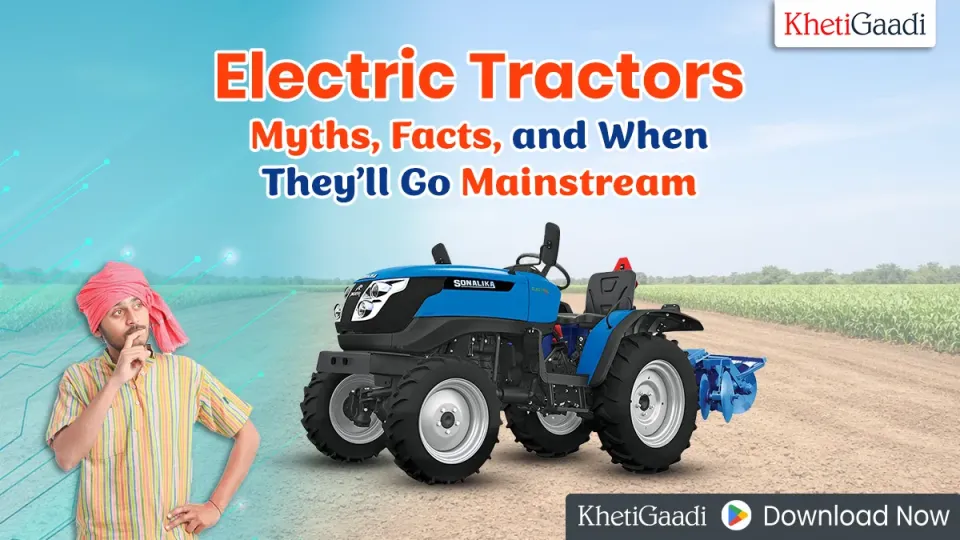
Electric vehicles are growing quickly. Cars and bikes have already turned to the power of the battery. Now the direction is also being set by agriculture. electric tractor models are coming onto the farm.
Still, many farmers are confused. Some think they are weak. Others think they are too expensive. Others believe they are not effective in rural areas.
Know the misconceptions to know what comes next.
Root Cause: Myths Around Electric Tractors
The sluggish adoption rate of electric tractors is primarily due to misinformation and ignorance. Farmers trust diesel tractor models because that’s what they’ve used for decades. Change always creates doubts.
Here are some of the biggest myths.
Myth 1: Electric tractors are low power
Most people think electricity means weakness. They literally measure it against tiny electric cars.
In reality, electric motors provide:
- Instant torque
- Smooth power delivery
- Better control at low speed
Part of the confusion occurs when it comes to battery capacity, not motor power.
Myth 2: They cannot work long hours
Many farm jobs mean working 8–12-hour days, especially when it’s busy. Electric tractors rely on battery backups.
They typically last a few hours, depending on battery size, before needing a charge. This is a worry for farmers whose balance sheet never sleeps.
Myth 3: Charging is not possible in villages
Rural areas may face:
- Power cuts
- Voltage issues
- Limited charging infrastructure
This is why electric tractors are seen as not dependable by many farmers. But the fact is, rural electrification and solar are getting better every year.
Myth 4: They are very expensive
Electric tractors are typically more expensive to buy. Farmers mostly look at what their up-front price is, not their long-term savings.
This creates resistance in adoption.
Solution: Facts About Electric Tractors
Now, we must speak in terms of reality, not fear.
Fact 1: Lower running cost
Electric tractors do not need diesel. They are simpler mechanically than diesel engines.
This reduces:
- Daily fuel expenses
- Engine servicing cost
- Oil changes and filter replacements
The real benefit increases over time because operating cost becomes lower.
Fact 2: Less maintenance
There’s no elaborate internal combustion engine. There is no exhaust system. Less is more when it comes to moving parts and breakdown opportunities.
That makes electric tractors easier to maintain.
Fact 3: Environment-friendly farming
Electric tractors produce:
- Zero tailpipe emissions
- Less noise
- No engine smoke
It’s useful in orchards, dairy farms, and greenhouse farming, where air cleanliness is important.
Fact 4: Government support is growing
Many governments are supporting electric vehicles through EV policies and subsidies. The stronger the policies, the greater the adoption.
Current Challenges
Electric tractors look promising, but there are some tough nuts to crack.
The major issues include:
- High battery cost
- Charging time
- Limited high-HP models
- Lack of farmer awareness
Until these issues trend downward, adoption will be slow.
When Will Electric Tractors Go Mainstream?
Electric tractors are not going to dominate overnight. Adoption will rely on advances in battery technology and charging infrastructure.
Acceptance will increase if battery prices come down, and backup gets better. Small farms are expected to be the first adopters of electric tractors. Medium-sized farms might follow in the next 5–10 years. Heavy commercial farming may take longer.
The change will take time; it will not occur overnight.
Who Should Consider Buying Now?
Electric tractors would be better for:
- Small land holdings
- Orchard and vineyard farming
- Dairy farms
- Farmers with reliable electricity supply
They might not be practical for farmers who use heavy tractors for long hours on remote farm plots.
Conclusion
Electric tractors are real, and they are getting better every year. The confusion mostly comes from lack of awareness.
They provide lower operational costs, less maintenance, and cleaner farm operations. But challenges, including battery life and charging time, continue to slow adoption.
Diesel tractors are going to be around for a long time. But electric tractors are slowly taking root in modern agriculture. With better technology and strong support, they will move closer to mainstream farming.