
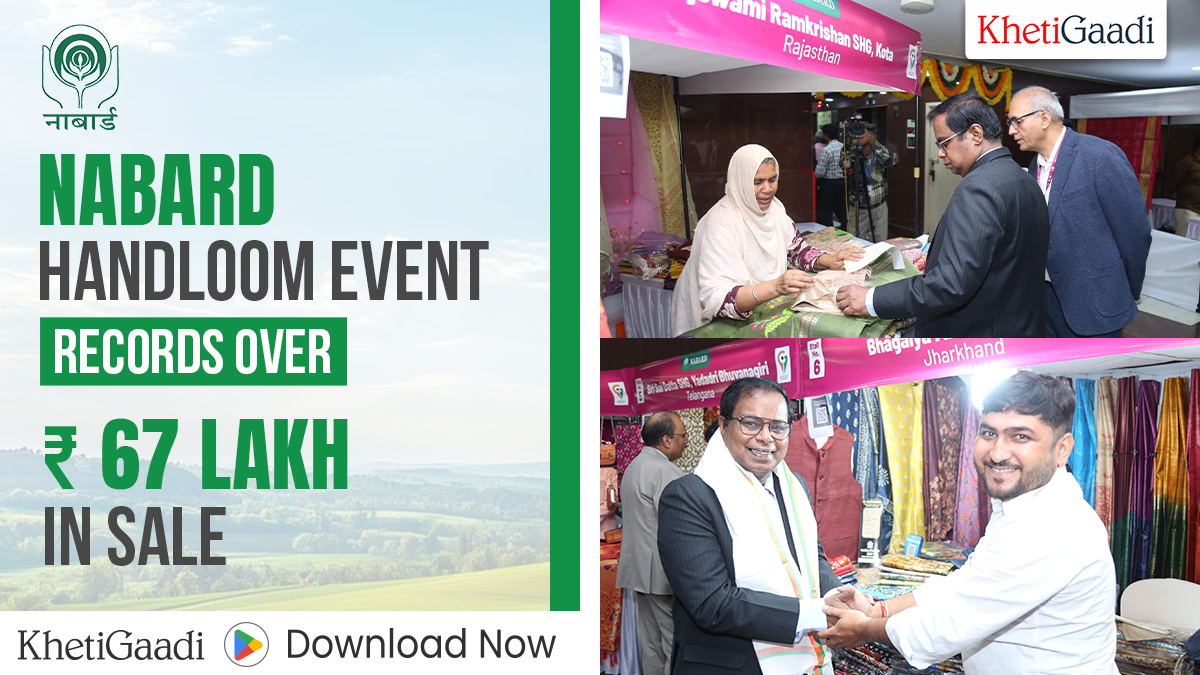
Mumbai, August 9, 2026: The NABARD Handloom Exhibition in Mumbai recorded sales of more than ₹67 lakh during its three-day run from August 5 to 7. The event brought traditional handloom products from across India under one roof and gave artisans a direct platform to meet buyers.
The exhibition was held at NABARDs Head Office in Bandra-Kurla Complex (BKC), Mumbai. It aimed to promote India’s handloom heritage while creating better market opportunities for rural artisans and producer groups.
What Did the NABARD Handloom Exhibition Showcase?
The NABARD Handloom Exhibition featured 15 weaving traditions from 14 states. Nine of the products displayed at the event had Geographical Indication (GI) recognition.
Visitors could explore and purchase a wide range of traditional products. These included Paithani from Maharashtra, Pochampally Ikat from Telangana, Kota Doriya from Rajasthan, Sambalpuri from Odisha and Bhagalpur Silk from Bihar.
Other traditions showcased included Kantha Stitch, Kutch Shawls, Venkatagiri, Arani Silk, Balaramapuram, Mubarakpur Handloom, Ambala Handlooms, Bagh, Bhagaiya Silk and Uttariya.
The strong sales response showed continued interest in traditional Indian handloom products. The exhibition also allowed participating artisans to connect directly with consumers and understand their preferences.
How Did the Event Support Rural Artisans?
The exhibition was not limited to product sales. NABARD also used the event to create wider business opportunities for participating artisans.
A Buyer-Seller Meet was conducted on August 6. It allowed artisans to connect with urban customers and gain insights into their evolving needs. The meeting also helped participants explore possible long-term business relationships.
Artisans received participation certificates during the programme. The three best-performing stalls were also presented with trophies.
Such initiatives can help rural producers improve market access, build business connections and explore new opportunities. They also contribute to broader efforts to strengthen rural livelihoods.
Did NABARD Focus on Digital Marketing?
The programme also placed a strong focus on digital selling. On August 7, NABARD arranged an awareness session on ONDC and MyStore for participating artisans.
The session introduced artisans to digital onboarding, online selling, branding, catalogue creation, inventory management and social media marketing.
Ankita Kapur from Hippo Innovations Pvt. Ltd. led the session. Artisans discussed their challenges with online marketing and learned how digital platforms could help them reach customers outside their local markets.
The programme also featured an interaction with Padma Shri Dr. Rajanikant, a specialist in Geographical Indication (GI) and the founder of the Human Welfare Association.He explained the importance of GI registration and discussed Authorised User registration with participating artisans.
The NABARD Handloom Exhibition demonstrated how digital platforms can help traditional artisans connect with customers in broader markets.
How Does NABARD Help Strengthen India’s Handloom Sector?
NABARD has supported the handloom sector through market development and rural livelihood initiatives.
According to the information shared for the event, 43 handloom products supported by NABARD have received GI registration. NABARD has also helped establish 41 Rural Enterprise Producer Organizations (REPOs) within the handloom sector.
NABARD also provides weavers with opportunities to showcase their products at major exhibitions and market events. These initiatives are designed to improve market access and create better income opportunities for rural producers.
Government programmes also play a key role in strengthening rural communities.Readers can follow the latest government schemes and related developments on KhetiGaadi.
What Happens Next for India’s Handloom Sector?
India observes National Handloom Day annually on August 7. The occasion celebrates India’s rich handloom traditions and acknowledges the valuable work of skilled weavers.
The latest NABARD Handloom Exhibition showed how traditional craftsmanship can be connected with modern markets. By combining physical exhibitions, buyer interactions and digital platforms, such initiatives can help artisans reach more customers.
Improved market access and digital sales channels can help rural producers grow their reach while preserving India’s rich and diverse handloom heritage.
Stay connected to the KhetiGaadi WhatsApp channel and get the latest updates on farming innovations and government schemes. Visit KhetiGaadi for more information and guidance.
Contact Khetigaadi for guidance and updates on agriculture schemes for farmers:
Phone: 07875114466
Email: connect@khetigaadi.com