
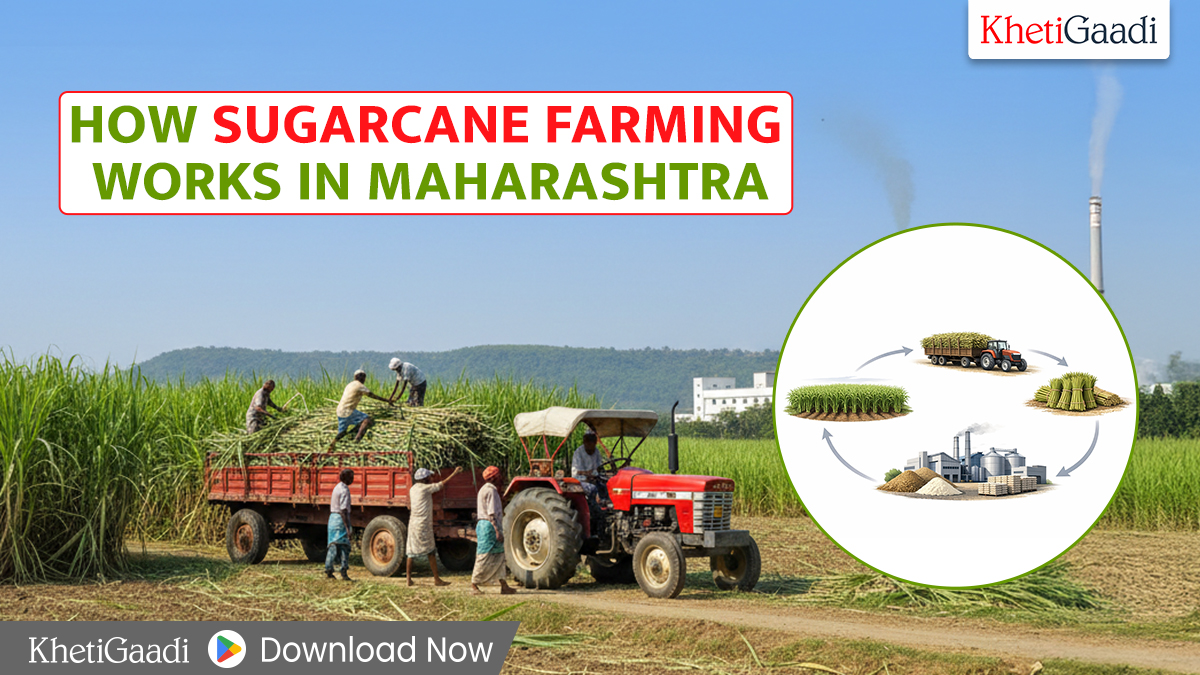
Sugarcane cultivation is one of the most important agricultural activities in Maharashtra. The state is known for its strong farming base and a well-established cooperative sugar industry. With abundant water availability in Western Maharashtra and fertile black cotton soil across several districts, sugarcane has emerged as a major cash crop that supports rural livelihoods, agro-industries, and the state economy.
This article explains the complete business model of sugarcane farming in Maharashtra, covering production practices, economics, key inputs, the role of the tractor, marketing systems, revenue opportunities, risk factors, and long-term sustainability.
1. Introduction: Why Sugarcane in Maharashtra?
Maharashtra is the second-largest sugarcane-producing state in India after Uttar Pradesh. Districts such as Pune, Satara, Sangli, Kolhapur, and Ahmednagar benefit from favorable climate conditions, good irrigation infrastructure, and a long-standing network of cooperative sugar factories. Under proper management, sugarcane yields can reach impressive levels.
Sugarcane is cultivated primarily for sugar and jaggery (gur), while valuable by-products like molasses and bagasse contribute to ethanol production and power generation. These multiple income streams make sugarcane a profitable commercial crop for farmers.
2. Core Components of the Sugarcane Farming Business Model
A. Land and Soil Suitability
Sugarcane requires deep, fertile soil with good moisture-holding capacity. Alluvial soil and deep black cotton soil with proper drainage are ideal. Soil health directly affects yield, input requirements, and overall farm profitability.
B. Capital and Input Costs
Major investments involved in sugarcane cultivation include:
- Land preparation through ploughing, furrowing, and leveling
- High-quality seed cane (setts) with high sucrose content
- Irrigation facilities such as drip systems or canal water
- Fertilizers and pesticides for balanced crop nutrition
-
Farm machinery where the tractor plays a central role in soil tillage, planting, interculture operations,
fertilizer application, and transportation
Mechanization using a tractor significantly reduces labor dependency and improves operational efficiency. Many small and medium farmers prefer renting tractor services instead of purchasing equipment.
3. Production Cycle and Farming Practices
A. Planting
Sugarcane planting in Maharashtra generally takes place between December and March during the Rabi season. Setts are placed in furrows prepared using mechanized tools, often operated with the help of a tractor.
B. Crop Care and Maintenance
Key activities during the growing phase include:
- Regular and efficient irrigation scheduling
- Weed control and pest management to prevent yield losses
- Timely application of nitrogen, phosphorus, and potassium
- Intercropping with legumes in early growth stages to improve soil fertility
Modern implements attached to a tractor are used for ridging, earthing-up, furrow formation, and precise fertilizer placement, helping farmers achieve better crop uniformity and yields.
C. Harvesting
Harvesting usually takes place 10 to 14 months after planting, depending on the variety and climatic conditions. While manual harvesting is still common, mechanized harvesting supported by tractors and trailers is gradually increasing.
4. Economics: Cost, Yield & Revenue
A. Cost Structure
Major cost components involved in sugarcane farming are:
- Land lease or rental charges
- Seed cane expenses
- Fertilizers and crop protection chemicals
- Labor for planting and harvesting
- Irrigation and electricity costs
- Tractor rental or maintenance expenses
- Transportation of cane to sugar factories
Although mechanization involves initial investment, it lowers long-term labor costs and increases productivity, making sugarcane cultivation more profitable.
B. Yield and Revenue
Average sugarcane yields in Maharashtra range from 70 to 100 tonnes per hectare, depending on soil conditions, irrigation availability, and farm management practices.
Farmers earn income from multiple sources, including:
- Sale of sugarcane to sugar mills based on weight and recovery percentage
- Molasses used in ethanol and alcohol production
- Bagasse used as fuel for electricity generation
- Jaggery production for local and regional markets
Many farmers diversify their income by producing jaggery or cultivating intercrops to reduce financial risk.
5. Marketing & Supply Chain
Sugarcane must be transported quickly after harvesting to avoid sucrose loss. Farmers usually supply cane to nearby sugar mills, cooperative factories, or jaggery units. Transportation is commonly done using tractor-trolley combinations.
The Fair and Remunerative Price (FRP) fixed by the government ensures a minimum price for farmers. Cooperative sugar mills also provide credit, inputs, and technical guidance, strengthening the supply chain.
6. Risks and Challenges
- Water scarcity in drought-prone regions
- Delayed payments from sugar mills
- Fluctuating sugar prices
- Labor shortages during peak seasons
- Rising input and cultivation costs
Adoption of drip irrigation, improved farm mechanization, and cooperative support systems help reduce these risks.
7. Sustainability and Future Outlook
Sugarcane by-products such as bagasse are increasingly used for co-generation of electricity, allowing sugar mills to supply renewable energy to the grid. Precision farming, improved seed varieties, and increased use of modern tractors and harvesters are shaping the future of the sector.
Government initiatives promoting ethanol blending further stabilize demand and ensure better long-term income for sugarcane farmers.
Conclusion
Sugarcane farming in Maharashtra represents a successful blend of traditional agricultural knowledge and modern agribusiness practices. Fertile soils, strong cooperative institutions, and efficient use of tractors provide farmers with multiple income opportunities—from sugar production to renewable energy.
With improved mechanization, better water management, and policy support, sugarcane cultivation continues to remain a resilient and profitable farming model in Maharashtra.